English-speaking day Montessori education Children from 12 months to 6 years Weekly German lessons Two minutes to the S5
Taunus International Montessori School e.V.
DE EN
Book a visit

English-speaking Montessori kindergarten near Frankfurt

English-speaking kindergarten near Frankfurt

Montessori education and natural English immersion for children from 12 months to 6 years

At TIMS, children do not experience English as an extra subject. It is simply part of their everyday life.

In a carefully prepared Montessori environment they hear and use English while playing, working, singing, telling stories, eating, moving and exploring together.

TIMS combines a consistently English-speaking kindergarten setting with the Montessori idea: children may act independently, learn at their own pace and build confidence in their own abilities.

TIMS is located in Oberursel near Frankfurt and warmly welcomes German, German-English and international families.

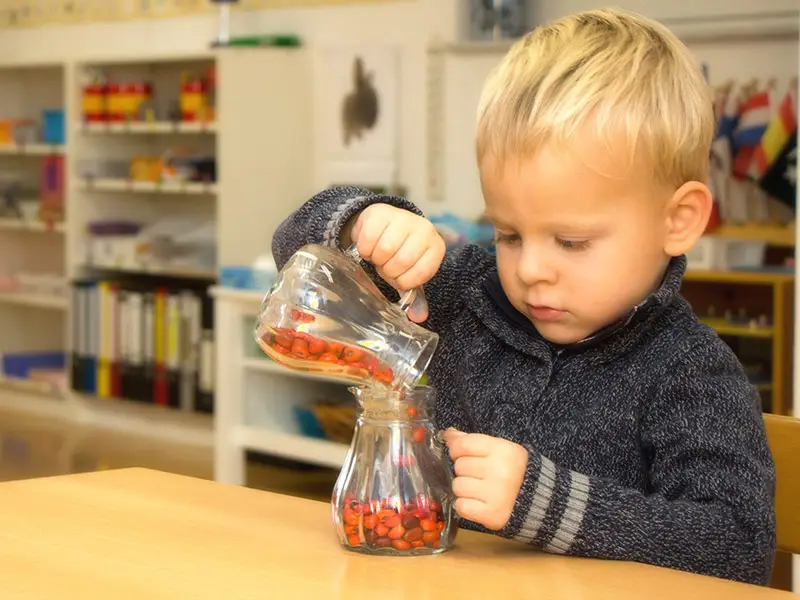
Child pouring beads with deep concentration while working independently with Montessori material

1973more than
50 years

Founded in 1973 Montessori from 12 months English-speaking day Weekly German lessons Direct S5 connection to Frankfurt

TIMS at a glance

12 months to 6 years

A toddler group and three mixed-age kindergarten groups

English throughout the day

Language experienced naturally rather than in isolated lessons

Montessori education

Independence, concentration and the joy of discovery

German lessons

Additional weekly language support from a German-speaking teacher

Easy to reach

Two minutes to the S5, 13 minutes to Frankfurt Hbf – plus parking on site

Learning and growing independently

Montessori education that trusts the child

Montessori education starts from the assumption that children are naturally curious and want to learn.

What they need is an environment that gives them security, orientation, meaningful materials and the freedom to become active themselves.

At TIMS children are accompanied with respect. Teachers observe attentively, introduce new materials and then give children the space to work on their own.

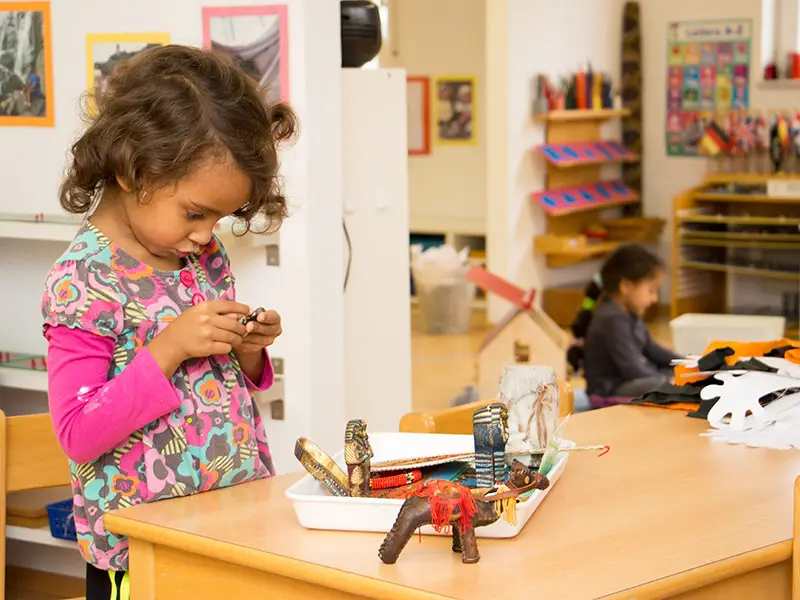
Child working independently with Montessori materials at a table

The prepared environment

Every material has a fixed place and a clear educational purpose.

The rooms invite children to choose a task, work with concentration, repeat an activity and then return the material for the next child.

In doing so they develop not only knowledge but also a sense of order, responsibility and respect for the shared environment.
Learning by doing

Children learn particularly deeply when they are allowed to do things themselves.

They pour water, sort, count, compare, write first characters, work with shapes, care for plants and take on small everyday tasks.

Understanding, concentration and self-confidence grow out of these concrete experiences.

Teachers as guides

Montessori teachers do not prescribe every step.

They observe, recognise interests and readiness to develop, present suitable materials and support the child in mastering tasks more and more independently.

Self-correcting materials

Many Montessori materials have a built-in control of error.

Children can therefore see for themselves when something does not yet fit and try out a new solution on their own.

This builds persistence, problem-solving skills and the experience: I can work it out myself.

“Help me to do it myself.”

This Montessori attitude accompanies children at TIMS from toddlerhood through to the transition to school.

Learn more about Montessori at TIMS

What children can develop in a Montessori environment

Independence

Children learn to choose tasks, make decisions and increasingly care for themselves.

Concentration

Longer, uninterrupted work periods give children the chance to engage deeply with one activity.

Self-confidence

Their own successes and self-found solutions strengthen trust in their own abilities.

Language and communication

Conversations, stories, books, songs and concrete materials support language understanding.

Mathematical thinking

Montessori materials make quantities, sizes, sequences and mathematical relationships tangible.

Social responsibility

Children learn consideration, respect, cooperation and responsibility for the shared environment.

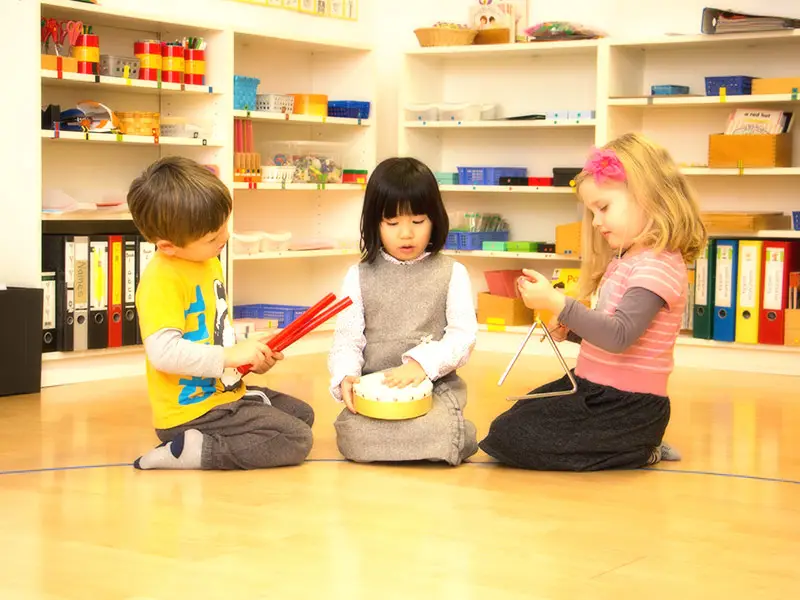
Three children making music together with a tambourine, rhythm sticks and a triangle

Experiencing language instead of memorising it

An English-speaking kindergarten day

At TIMS, English is the shared language of everyday life together.

Children do not only meet it during separate language lessons. They hear and experience English throughout the whole day – in meaningful, recurring and emotionally safe situations.

How children encounter the English language

One line that never breaks: at TIMS English is not a slot in the timetable, it runs through the entire day.

  • at the personal welcome “Good morning! It’s good to see you.”
  • during Montessori work “Would you like to work with this?”
  • in the morning circle “Let’s sing our good-morning song.”
  • while playing together “Can I play with you?”
  • through songs and rhymes “Head, shoulders, knees and toes.”
  • during reading and storytelling “What do you think happens next?”
  • at mealtimes “Would you like some more water?”
  • when getting dressed and tidying up “Let’s put our jackets on.”
  • in the garden and on the playground “Look how high you can climb!”
  • during movement, music and creative activities “Let’s move to the music.”
  • in everyday conversations with the teachers “How are you feeling today?”

The English sentences are examples showing how language can occur during the day – not a fixed schedule.

Understanding may come before speaking

Children do not have to speak English from day one.

At first they observe, hear recurring sentences and work out meaning through gestures, objects, actions and familiar routines.

As their confidence grows they respond to English and begin, at their own pace, to use words and sentences themselves.

Weekly German lessons

Although the daily life of the groups is in English, all children additionally receive weekly German lessons from a German-speaking teacher.

For German-speaking children this supports the age-appropriate development of their mother tongue. Children with another family language are introduced to German playfully.

In short

TIMS is not a classic 50/50 bilingual setting. Daily kindergarten life is in English. German is additionally supported once a week.

Learn more about daily life at TIMS

For families with more than one language

When one parent speaks English

In many families one parent speaks English and the other German or another language.

This often raises the question of how both languages can keep a secure place in a child's everyday life over the long term.

An English-speaking kindergarten can support the English-speaking parent, because English no longer has to be carried at home alone.

The child experiences the language in a community as well – with other children, teachers, books, songs, materials and daily routines.

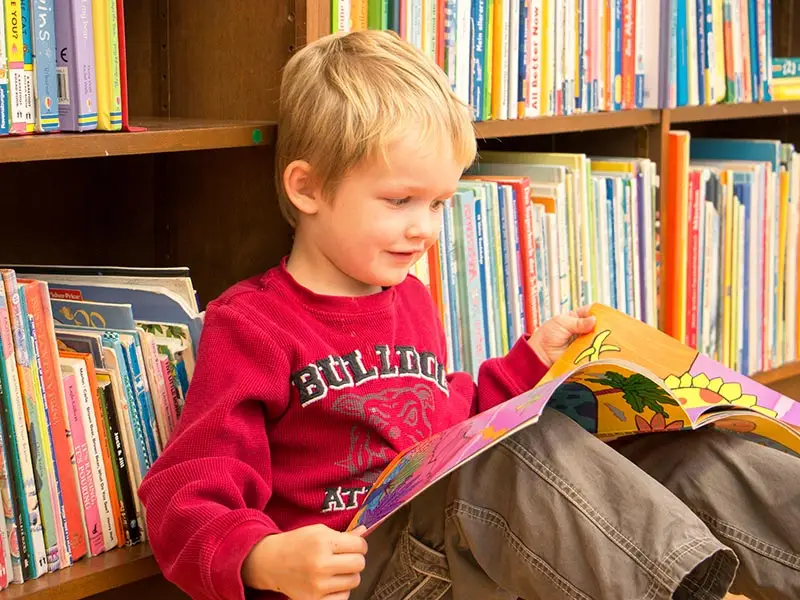
Child absorbed in an English picture book in front of the bookshelf

English becomes more than a family language

When English is connected not only to one parent but also to friendships, play, movement and learning, the language can take on a broader and more natural meaning for the child.

German stays firmly anchored

Most families meet German every day outside the kindergarten – at home, in the neighbourhood, while shopping, in clubs and in society.

In addition, children at TIMS receive weekly German lessons.

Also suitable without an English-speaking parent

An English-speaking parent is not a requirement.

Families who speak only German also choose TIMS deliberately, because they want to give their child natural, regular and positive access to English.

English at kindergarten. German or another family language at home.
Both languages may keep their own, reliable place.

Montessori from toddlerhood to school entry

The right environment for every stage of development

TIMS accompanies children from 12 months to 6 years. Rooms, Montessori materials, daily routines and educational goals are adapted to each stage of development.

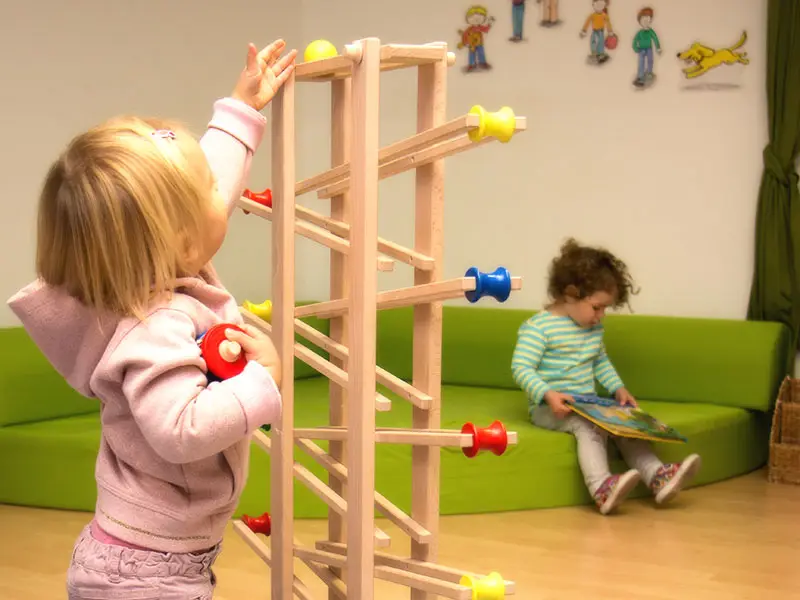
Toddler playing at a ball track while another child looks at a picture book in the background

Toddler Group

12–36 months

For children from 12 to 36 months

The Toddler Group offers a warm and gentle first step from home into regular care.

The focus is on trust, secure relationships, language, movement, sensory discovery and early independence.

Montessori for toddlers means, among other things:

  • carrying
  • pouring
  • sorting
  • opening and closing
  • tidying up
  • washing hands
  • dressing more and more independently
  • making simple choices
  • coordinating movements
  • gathering first social experiences

Children need no English before they start. They absorb the language through routines, songs, stories, play and caring interaction.

Discover the Toddler Group
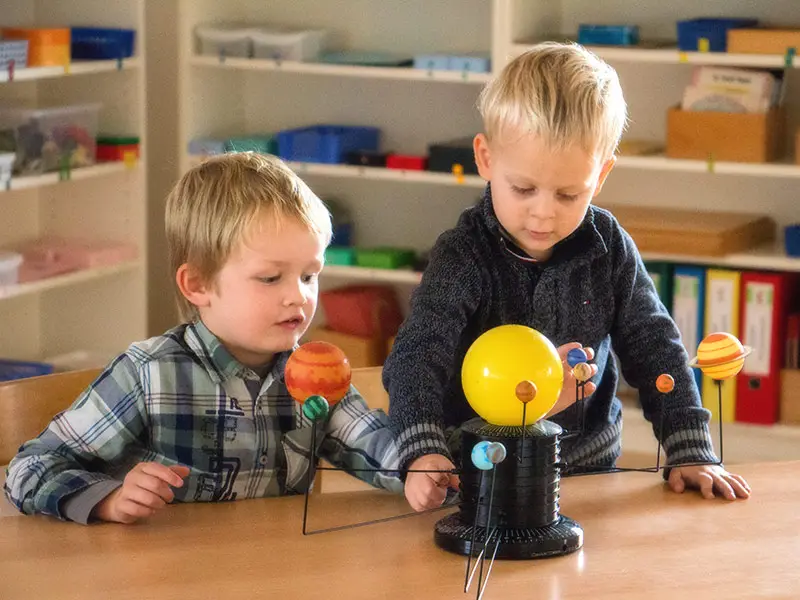
Two children exploring a model of the solar system together

Montessori kindergarten

3–6 years

For children from 3 to 6 years

TIMS offers three mixed-age Montessori kindergarten groups.

Younger and older children learn with and from each other. Younger ones gain orientation from older children. Older ones develop confidence and a sense of responsibility by helping and passing on what they know.

The Montessori areas include:

  • practical life
  • sensorial
  • language
  • mathematics
  • culture
  • nature
  • creative discovery

Children develop independence, concentration, communication, social confidence and a joy of learning.

Discover the kindergarten groups

All age groups at a glance

Why Montessori and English immersion fit together well

Montessori work connects language with concrete objects, movements and actions.

A child hears the English word for “pouring” not in the abstract, but while actually pouring water.

They hear words for colours, shapes, sizes, quantities and movements while using the matching materials.

English is thereby linked to visible and tangible experiences.

Language in context

Words and sentences arise in situations children can understand.

Natural repetition

Children can repeat activities and hear familiar language again while doing so.

Individual pace

Children may first observe and understand before they speak themselves.

Confidence

Their own successes with materials and language strengthen trust in their abilities.

A foundation for different educational paths

TIMS does not aim to turn children into little pupils as early as possible.

The focus is on fundamental skills that can support children in a variety of later school environments:

  • attention
  • concentration
  • independence
  • communication skills
  • self-regulation
  • problem-solving
  • responsibility
  • social confidence
  • curiosity
  • a positive attitude towards learning

English as a familiar language of learning

Children who already know English from their kindergarten day do not have to discover the language later purely as a completely new school subject.

They can approach English conversations, books and possible lessons with greater familiarity.

This can support a later move into an international or bilingual school environment, without the kindergarten anticipating formal schooling.

Care that families can count on

Reliable care for working parents

For families, the educational concept is not the only thing that matters. It is just as decisive whether care actually takes place reliably and whether work and family life can be planned.

For more than 50 years TIMS has stood for stable routines and exceptionally high organisational reliability.

No sudden closures due to internal shortages

To this day TIMS has never had to cancel a day of care at short notice because of internal organisational or staffing shortages.

Only exceptional events beyond the school's control – such as severe storms, official orders or comparable emergencies – can mean that care is temporarily not possible.

What this means for families

  • better planning of working life
  • fewer unexpected gaps in care
  • stable daily structures
  • familiar routines for the children
  • more security in family life
English-speaking education is valuable. Reliable care is essential. At TIMS the two belong together.

Opening hours

Current opening hours of the Taunus International Montessori School
DayTime
Monday to Thursday8:00 – 17:00
Friday8:00 – 16:30
Regular school day8:30 – 15:00

Current information on opening hours

Extended hours are being planned

TIMS plans to extend care times in the near future by around 30 minutes each in the morning and in the afternoon.

This extension is still at the planning stage. Families are asked to enquire about the current status and the care times available at the moment.

An international Montessori community

TIMS is more than a place of care.

As a non-profit, parent-run association it brings together children, families, teachers, management and the board in an active community.

German, German-English and international families meet each other with openness and respect.

Children experience:

  • international friendships
  • different traditions
  • various languages and cultures
  • mutual consideration
  • celebrating together
  • curiosity about other ways of life
  • a strong sense of belonging

Many families appreciate that not only their children but they themselves can make connections and become part of a long-term community.

Get to know TIMS and its community
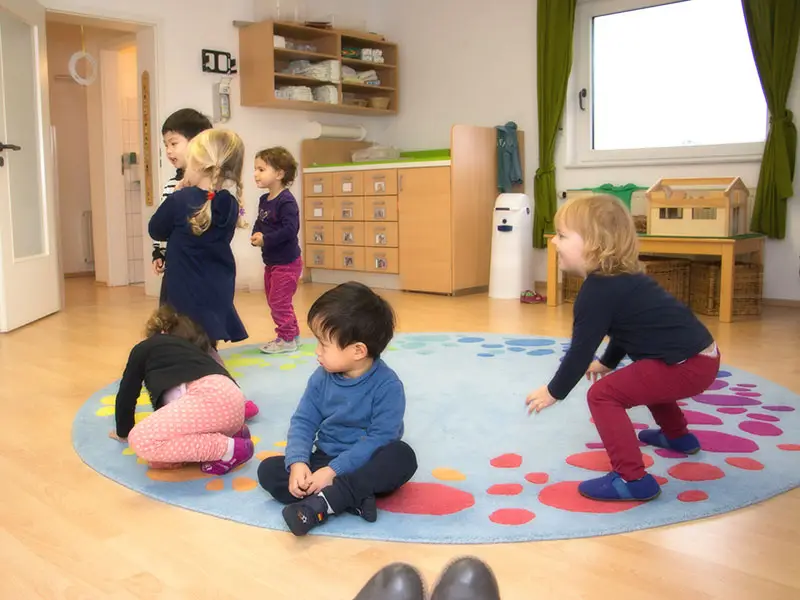
Group of children moving together on the carpet in the group room

Easy to reach from Frankfurt and the Taunus

English-speaking Montessori kindergarten in Oberursel

TIMS is located in Oberursel and is easy to reach from Frankfurt as well as from the Hochtaunus region.

The location is particularly practical for families who live in the Taunus and work in Frankfurt, or who commute between the two areas every day.

Taunus International Montessori School e.V.
Zimmersmühlenweg 77
61440 Oberursel (Taunus)
Germany

Only a few minutes' walk to the S5

The school is only about a two-minute walk from the S-Bahn stop. Line S5 provides a direct connection to Frankfurt: three stops from Frankfurt central station, around 13 minutes' travel time.

Parking on site

For families who come by car, parking spaces are available directly on the grounds. Drop-off and pick-up can therefore be combined easily with the way to work.

Own garden and playground

TIMS has its own garden and playground. Children regularly have the opportunity for movement, free play and outdoor experiences.

View the location on the official TIMS website

Plan your route externally – opens an external map service. No map data is loaded on this page.

More than 50 years of Montessori experience

TIMS was founded in 1973 and has been accompanying families from Oberursel, Frankfurt and the Taunus for more than 50 years.

Over the decades an English-speaking Montessori community has grown in which children can develop linguistically, socially, emotionally and culturally.

What has remained over the years:

  • child-centred Montessori education
  • an English-speaking day
  • personal relationships
  • an international community
  • close cooperation with parents
  • fostering independence
  • stable and reliable care
  • joy of learning
Learn more about TIMS
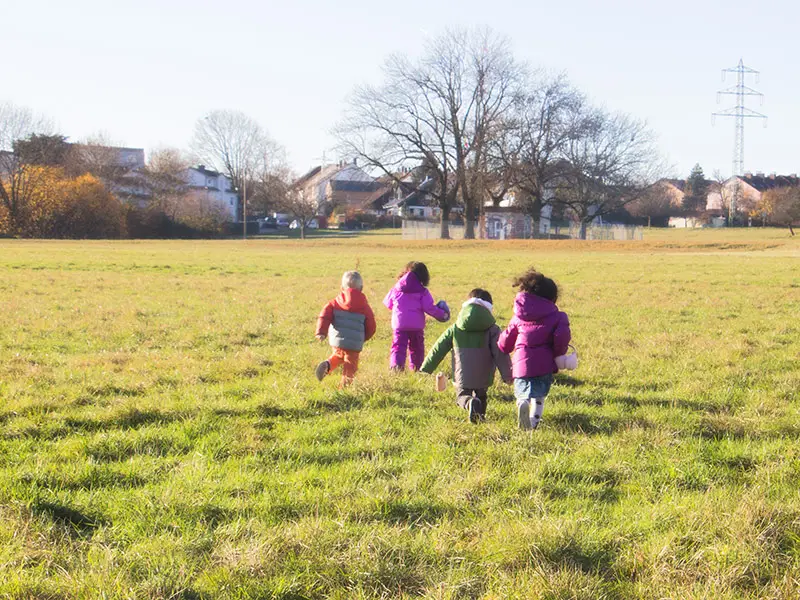
Children walking together across a meadow near the kindergarten

Frequently asked questions

Answers on language, Montessori, age groups, care and admission.

Is TIMS an English-speaking kindergarten?

Yes. Daily life in the groups at TIMS takes place in English. The teaching staff communicate with the children in English throughout the day.

Is TIMS a Montessori kindergarten?

Yes. TIMS follows Montessori education and works with a prepared environment, age-appropriate Montessori materials and the aim of fostering independence, concentration and personal responsibility.

Is TIMS a classic bilingual nursery?

No. TIMS is not a classic 50/50 bilingual setting. Daily kindergarten life is in English. German is additionally taught once a week by a German-speaking teacher.

Is German offered at TIMS as well?

Yes. All children receive weekly German lessons from a German-speaking teacher.

Does my child already need to speak English?

No. Children can start without any knowledge of English. They pick up the language through routines, gestures, songs, stories, play, Montessori materials and personal relationships.

Is TIMS suitable for German families?

Yes. Families who speak only German also choose TIMS deliberately, in order to give their child natural and regular access to English.

Is TIMS suitable for families where one parent speaks English?

Yes. An English-speaking kindergarten can support the English-speaking parent, because the child experiences English in a larger community and in many everyday situations as well.

Will English overwhelm my child?

Children do not have to understand or speak every word straight away. They may observe and listen first. Recurring routines, gestures, objects and concrete situations help them work out meaning step by step.

Will my child still learn enough German?

For German-speaking or German-English families, German normally remains firmly anchored at home and in the wider social environment. In addition, children at TIMS receive weekly German lessons.

What are the benefits of Montessori for my child?

Montessori education supports, among other things, independence, concentration, coordination, a sense of responsibility, problem-solving skills and trust in one's own abilities.

Can Montessori children simply do whatever they want?

Children choose within a carefully prepared environment and clear boundaries. Teachers observe, accompany and introduce suitable materials.

How is my child's development supported?

The teachers observe the children continuously, document their development and adapt materials, impulses and next steps to each child's individual stage of development.

From what age can children start?

TIMS accepts children from 12 months. The Toddler Group is intended for children from 12 to 36 months. After that children join one of the mixed-age kindergarten groups for 3- to 6-year-olds.

Can my child start during the school year?

Starting during the year is generally possible, provided a suitable place is available.

How reliable is the care?

TIMS places great importance on stable routines and reliable organisation. To date, no day of care has had to be cancelled at short notice because of internal organisational or staffing shortages. Exceptional events beyond the school's control remain excluded from this.

What are the opening hours of TIMS?

TIMS is currently open Monday to Thursday from 8:00 to 17:00 and Friday from 8:00 to 16:30. An extension of care times is planned. Please enquire about the current status.

How far is TIMS from the S-Bahn?

TIMS is only about a two-minute walk from the S-Bahn stop. Line S5 provides a direct connection to Frankfurt: three stops from Frankfurt central station, around 13 minutes' travel time. For families who come by car, parking spaces are available on the grounds.

Can I visit TIMS in person?

Yes. A personal visit is expressly recommended. Families can see the Montessori rooms, the outdoor areas and daily kindergarten life, and ask questions about settling in, language, groups and availability.

More information on the official TIMS website

Get to know TIMS in person

A website can provide information. Whether a kindergarten feels right for your child and your family is something you experience best on site.

During a personal visit you can:

  • see the Montessori rooms
  • experience the prepared environment
  • learn more about English immersion
  • ask questions about the weekly German lessons
  • discuss the Toddler Group or the kindergarten groups
  • see the outdoor grounds
  • ask about current availability
  • find out more about settling in and admission
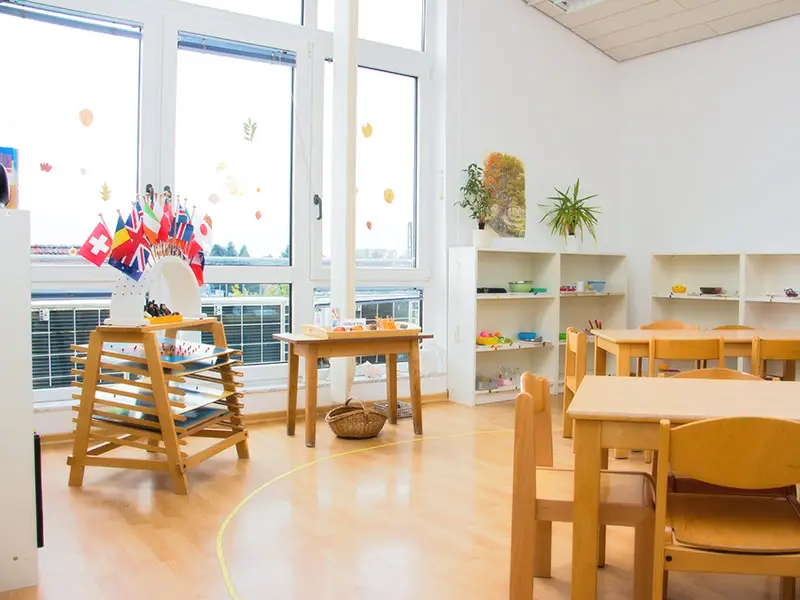
Bright group room with Montessori shelves, children's tables and international flags

Experience English. Grow independently. Learn with joy.

For your child you are looking for:

  • a consistently English-speaking kindergarten day
  • Montessori education
  • caring and reliable childcare
  • weekly German lessons
  • small, age-appropriate groups
  • an international community
  • stable relationships
  • good access from Frankfurt and the Taunus
  • an environment that fosters independence and curiosity

Then come and get to know TIMS in person.

Apply to TIMS

At TIMS children experience English every day and grow in an environment that trusts them.